
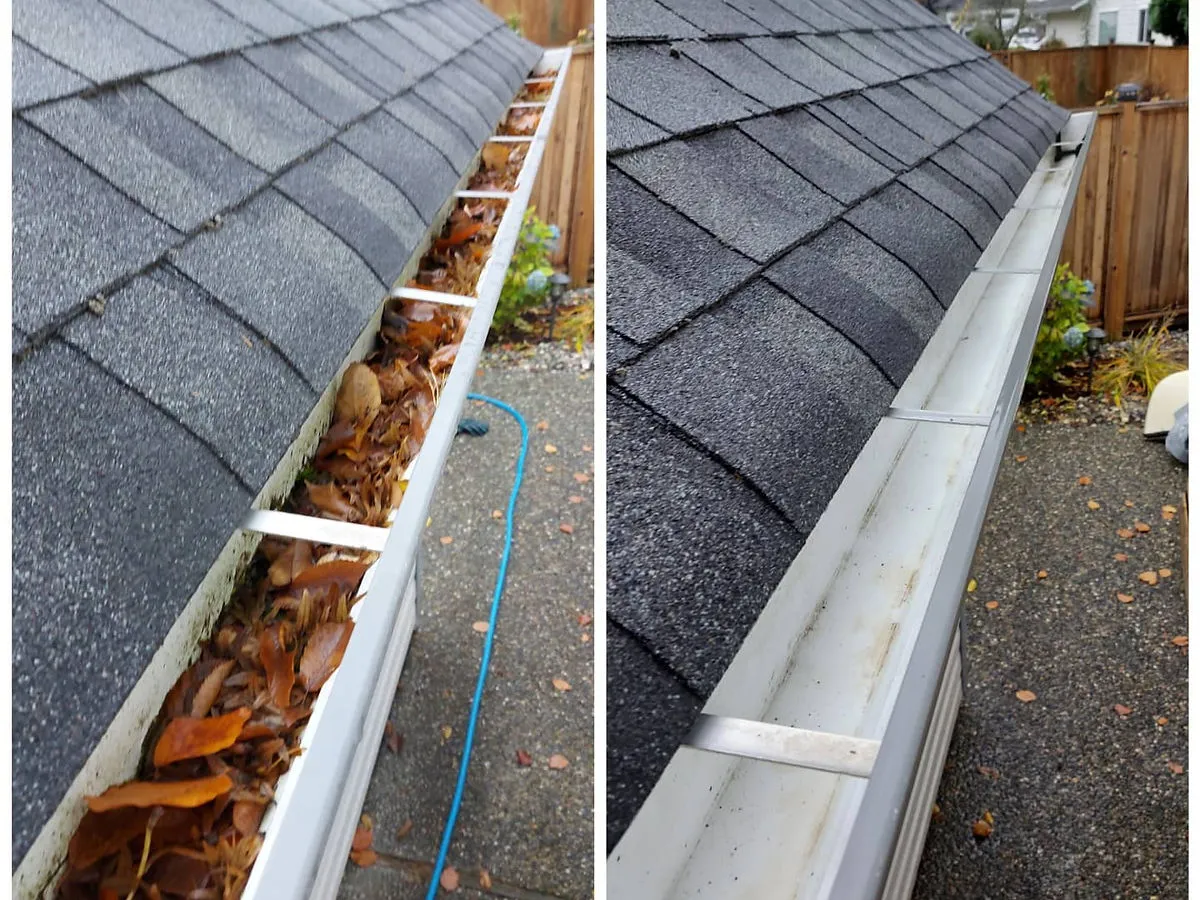
Water pouring over the edge of your gutters in a downpour isn’t always a clog — but most of the time it is. Here’s how to tell what’s going on.
Most gutters that overflow in heavy rain are partly clogged — usually by leaves, conifer needles or moss washed off the roof — or have a blocked downspout that won’t let water leave fast enough. Less often, the gutter is sloped wrong or too small for the roof. Clearing the channel and checking that each downspout actually flows fixes the majority of cases.
Fall in the Fraser Valley brings long stretches of steady rain and the occasional atmospheric river, and that’s exactly when overflowing gutters show up. Water sheets over the front edge, pours off the corners, or spills right above a door or window.
The usual causes, most common first
1. Debris in the gutter channel
Leaves, needles, seed pods and wind-blown debris collect in the channel and slow the water down until it spills over the edge. Under heavy tree cover — especially cedars and firs, which shed needles all through the wet season — a gutter can refill within weeks of being cleaned.
2. A blocked downspout
If the gutter overflows at one spot while the rest of the run looks clear, the downspout at that end is often plugged. Debris compacts at the top outlet or at the elbows, and the gutter backs up behind it. A trickle — or nothing — coming out of the bottom of the downspout during rain is the giveaway.
3. Moss washing off the roof
A mossy roof keeps feeding the gutters. Rain loosens moss clumps and granules, and they wash straight into the channel and the downspout outlets. If your gutters keep plugging up soon after being cleaned, look up at the roof — roof moss removal alongside the gutter cleaning is usually what breaks the cycle. We explain why moss returns in why moss keeps coming back after roof cleaning.
4. Slope or capacity problems
A gutter that sags, pulls away from the fascia, or slopes the wrong way holds standing water in one section. And on large or steep roof areas, a very intense downpour can simply deliver more water than a standard gutter and downspout can carry, even when they’re perfectly clean. Those are installation problems — worth having a gutter installer assess once you’ve confirmed the system is clean.
How to narrow it down from the ground
| What you see | Most likely cause |
|---|---|
| Overflow along the whole run | Debris in the channel |
| Overflow near one downspout only | Blocked downspout outlet or elbow |
| Plants or moss visible above the gutter edge | Long-term debris buildup |
| Gutters refill quickly after cleaning | Moss or heavy tree debris from above |
| Standing water in one sagging section | Slope or fastener problem |
| Overflow only in the heaviest downpours, gutters clean | Capacity — worth an installer’s opinion |
Why it’s worth fixing before winter
- Overflow runs down the siding and leaves streaks that eventually need a house wash to clear
- Water dumped at the base of the wall instead of carried away by the downspout increases the risk of pooling around the foundation
- Full, waterlogged gutters are heavy and can pull fasteners loose over time
- Water spilling over an entry or walkway freezes on cold nights
What to do next
Don’t climb a ladder in the rain or on wet ground. Note where the overflow happens and whether water comes out of each downspout, then have the gutters cleaned and the downspouts flow-checked. Our gutter and eavestrough cleaning covers debris removal by hand, downspout checks and flushing where needed, and a tidy clean-up. If the problem is moss from the roof, pairing it with roof cleaning in the same visit saves a repeat trip.
To stay ahead of it, see our seasonal gutter cleaning schedule for Chilliwack.