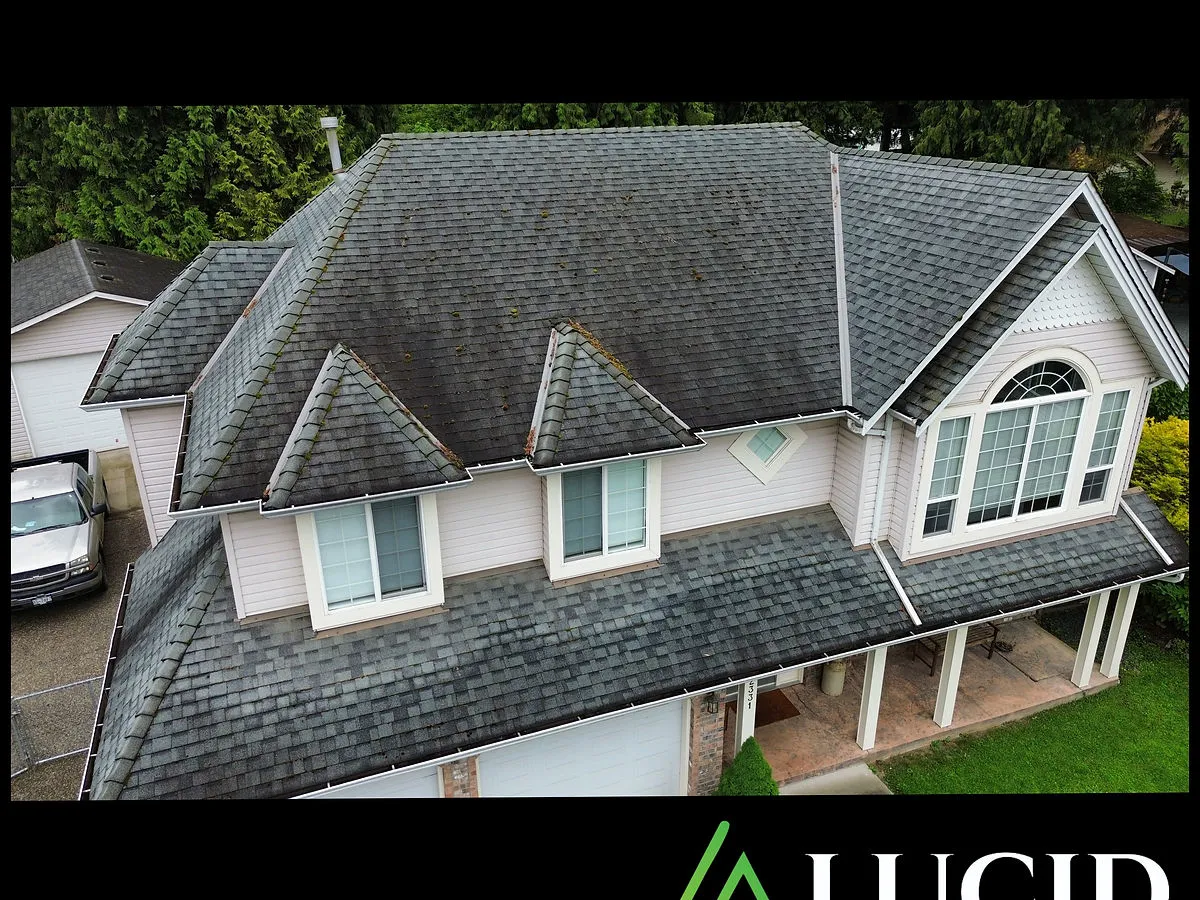
A clean roof that grows moss back within a year isn’t necessarily a sign of a bad cleaning — the conditions that grew it the first time are usually still there.
Moss regrows after cleaning because moss spores are already present almost everywhere in the air and on nearby trees and roofs, and they’ll take hold again wherever the same conditions exist — shade, moisture, and organic debris. Cleaning removes the existing growth; it doesn’t change the shade or drainage conditions that let it grow there in the first place.
It’s a fair question to ask after paying for a roof cleaning: if moss shows up again in a year or two, was the job actually done properly? Almost always, the answer is that the cleaning worked exactly as intended — the roof’s own conditions are simply still favourable for moss, so new growth eventually takes hold again.
What controls how fast moss comes back
- Shade — north-facing slopes and sections under overhanging trees dry out far slower after rain, giving moss spores more time to establish
- Roof pitch — lower-slope sections hold moisture longer than steep sections, which shed water faster
- Nearby trees — overhanging branches drop organic debris that gives moss something to root into, and keep the roof surface shaded
- Roof material and age — older or more textured shingles hold moisture and debris more readily than smoother, newer material
Why this isn’t unique to any one cleaning method
This applies whether a roof was soft-washed or treated any other way — no cleaning method changes how much shade a roof gets or how quickly a north-facing slope dries out. Removing moss resets the clock; it doesn’t remove the underlying reason that section of roof grew moss in the first place.
What actually slows regrowth down
A few things genuinely extend the time between treatments, even though none of them can prevent regrowth indefinitely on a shaded roof:
- Trimming back overhanging branches to reduce shade and debris on the affected sections
- Keeping gutters and valleys clear so organic debris doesn’t sit against the roof surface — see our gutter cleaning service for the debris side of this
- Addressing moss while it’s still a light, patchy growth rather than waiting until it’s established and thick, since heavier growth tends to leave more root material behind even after treatment
- Routine roof cleaning on a schedule that matches how shaded the roof actually is, rather than a fixed interval that ignores it
Realistic timeline expectations
A sun-exposed roof with little tree cover can often go several years before moss becomes a visible problem again. A heavily shaded, north-facing roof under mature conifers may show the first patches of new growth within a single wet season. Both outcomes can follow an identical, correctly-done cleaning — the difference is entirely in the roof’s own exposure, not the quality of the work.
When regrowth speed might actually signal a problem
If moss reappears within just a few weeks, in the exact same dense pattern as before, across a section of roof that gets reasonable sun exposure, that’s worth a follow-up conversation with whoever did the work — it can indicate the treatment didn’t fully reach the root growth in that area. That’s a different situation from moss slowly reappearing over a year or two on a shaded slope, which is the normal, expected pattern.
FAQs
Does moss coming back mean the roof cleaning was done wrong?
Not usually. Regrowth over a year or more on a shaded section is normal and expected, since the shade and moisture that grew the moss originally haven’t changed. Very fast, dense regrowth within weeks in a sun-exposed area is more worth questioning.
Can moss be prevented permanently?
Not on a roof that stays shaded and damp — the spores are essentially always present in the environment. Trimming back trees and staying on a cleaning schedule that matches the roof’s exposure are the most effective ways to extend the time between treatments.
Should I treat moss myself between professional cleanings?
Light surface moss can sometimes be slowed with careful, roof-safe maintenance, but scraping or pressure washing moss off yourself risks lifting shingle granules or damaging the roofing material — the same reason professional roof cleaning uses a soft-wash approach rather than force.